A Brief Book List, Advent 2025
If you are looking for something interesting and edifying to read or to give to a friend or family member, here are some ideas from my own collection. Feel free to share.
Bill Boyd
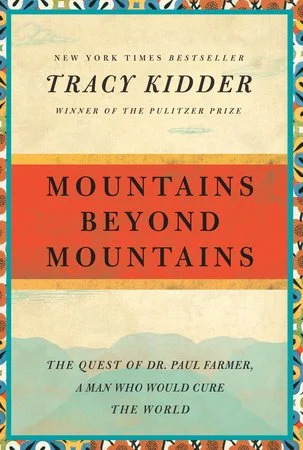
Mountains Beyond Mountains, Tracy Kidder
Dr. Paul Farmer’s biography. The only book I have listened to and, at the end, immediately pressed play and listened to again. Riveting, challenging and empowering. A testimony to the power of refusing to take no as an answer in order to love others.
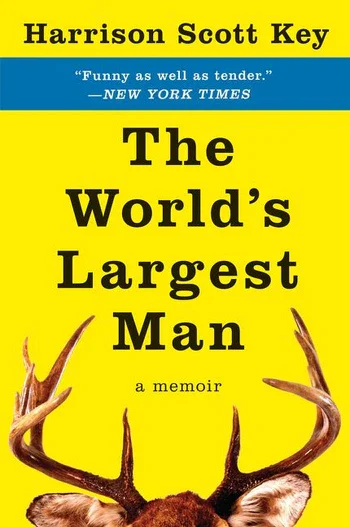
The World’s Largest Man, Harrison Scott Key
Funny, poignant, funny, poignant, funny … and then searingly honest. Key teaches Literature at SCAD. I would like to hang out with him.
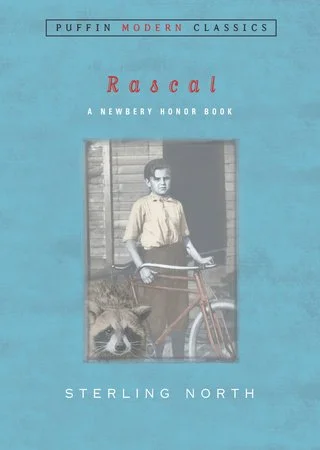
Rascal, Sterling North
One of the most endearing and beautiful books I have read. Great to read aloud with children or family.
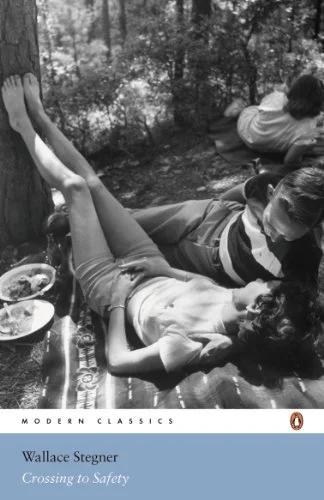
Crossing to Safety, Wallace Stegner
I finally read Crossing to Safety this year. It hit me like no other book I’ve read. Stegner wrote it at age 78, proving that we need more seasoned writers. It might be the most mature and interesting depiction of life and lifelong friendships and marriage I have encountered. Could it be the greatest American novel from the 20th century?
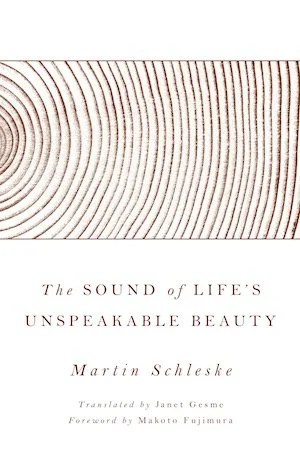
The Sound of Life’s Unspeakable Beauty, Martin Schleske
“When I ,as a luthier, describe the development of a violin throughout this book, it is not only a guided tour through my workshop but also an inner journey into the world of faith. The knowledge of the wood’s fibers and medullary rays, the search for acoustic colors, the fascination of luminous depth in the varnish along with the diversity of its resins, the beauty of the arch, involvement with passionate musicians - these all create a myriad of metaphors.
The philosopher-theologian Bonaventure (1221-1274) …. said, ‘Humans have lost the ability to read the book, namely the world. Therefore, it was necessary to give them another book, enlightening them to understand the metaphorical nature of the world, which they could no longer read. This other book is the Holy Scriptures, which is full of parables about things written in the world.’”
A Field Guide to Getting Lost, Rebecca Solnit
By the Queen of catchy turns-of-phrase, this is a book to read in order to find other books, people, places and things worthy of consideration. Solnit notes, “The word ‘lost’ comes from the Old Norse los, meaning the disbanding of an army, and this origin suggests soldiers falling out of formation to go home, a truce with the wide world. I worry now that many people never disband their armies, never go beyond what they know.”
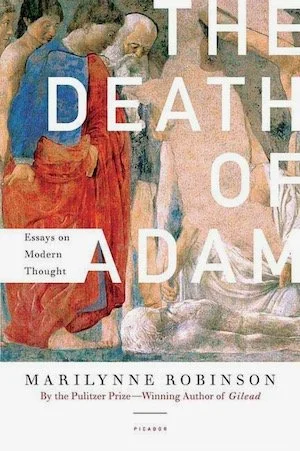
The Death of Adam; Essays on Modern Thought, Marilynne Robinson
Not unlike C.S. Lewis’s A Preface to Paradise Lost, this collection of essays pulls back the curtain on the breadth and depth of Robinson’s intellectual capacities, and the Calvinist underpinnings of such. Her essays on Darwinism makes the book a bargain, no matter the price.
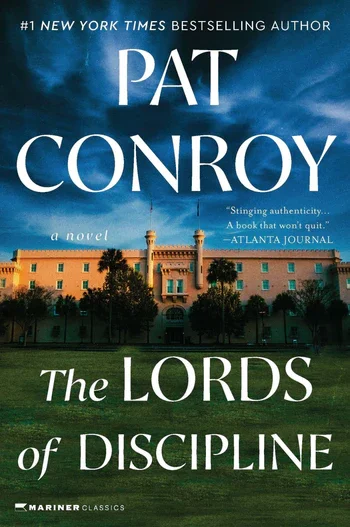
The Lords of Discipline, Pat Conroy
Probably my favorite coming-of-age novel. It combines history, suspense, romantic love, friendship, betrayal and the search for truth packaged in a “fictional” account of such significance that the institution in question blacklisted its author (a graduate) for several decades, until ultimately honoring him with an honorary degree and commencement address in 2000. This is a deeply southern novel with far-reaching impact.
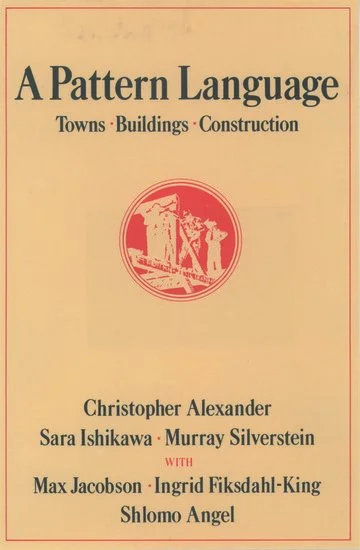
A Pattern Language, by Christopher Alexander, Sara Ishikawa, and Murray Silverstein
Possibly the most surprising book I own in terms of its ability to captivate and induce thought. The follow-up to The Timeless Way of Building, presented here is an alphabet or “language” of tried-and-true “patterns.” “Each pattern describes a problem which occurs over and over again in our environment, and then describes the core of the solution to that problem, in such a way that you can use this solution a million times over, without ever doing it the same way twice.”
The 253 patterns include “Magic of the City”, which of course explains features that make cities feel “magical”, “Old People Everywhere” advocates practically for ways older people might live in the midst of younger people, “Dancing in the Street” points to the beauty of festivity at hand, and you can guess the rest…“Corner Grocery”, “Half-Hidden Garden”, “Stair Seats”, “Teenager’s Cottage”, “Six-Foot Balcony”, “Thick Walls”, “Secret Place”, “Paving with Cracks Between the Stones”, and 242 more!
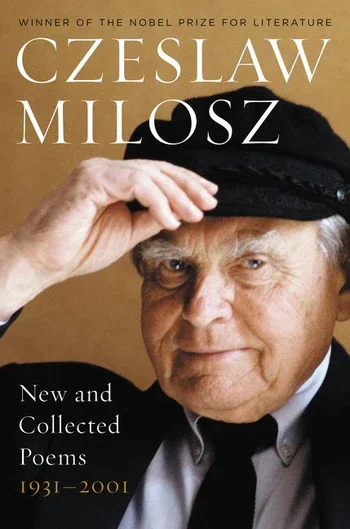
New & Collected Poems 1931-2001, Czeslaw Milosz
ENCOUNTER
We were riding through frozen fields in a wagon at dawn.
A red wing rose in the darkness.
And suddenly a hare ran across the road.
One of us pointed to it with his hand.
That was long ago. Today neither of them is alive, Not the hare, nor the man who made the gesture.
O my love, where are they, where are they going The flash of a hand, streak of movement, rustle of pebbles.
I ask not out of sorrow, but in wonder.
Wilno, 1936
“it is enough for [a poet] to publish his first volume of poems, to find himself entrapped. For hardly has the print dried, when that work, which seemed to him the most personal, appears to be enmeshed in the style of another. The only way to counter an obscure remorse is to continue searching and to publish a new book, but then everything repeats itself, so there is no end to that chase. And it may happen that leaving books behind as if they were dry snake skins, in a constant escape forward from what has been done in the past, he receives the Nobel Prize.” —Csezlaw Milosz, 8 December 1980, Stockholm, Sweden